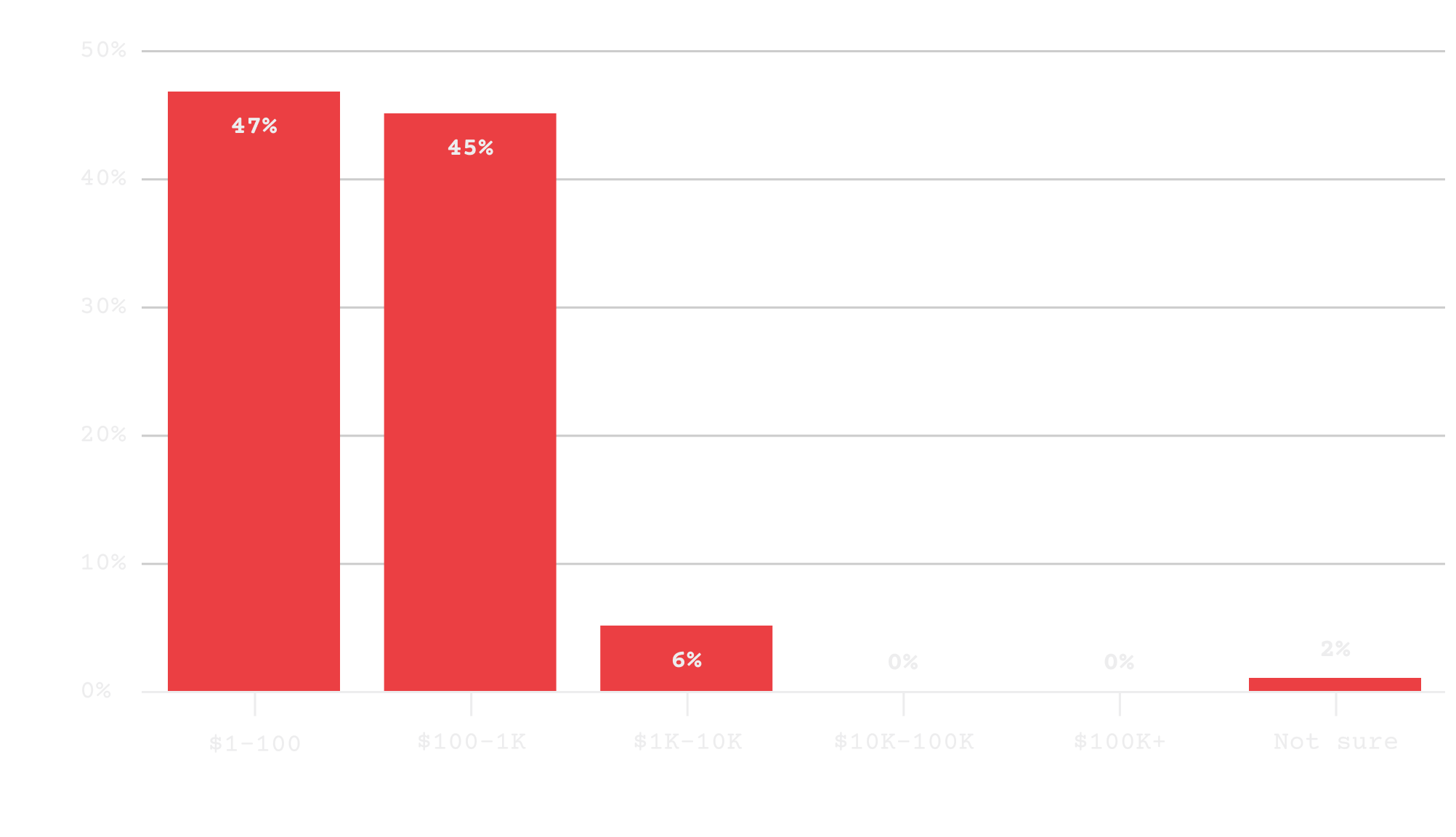
Which best describes your monthly Average Revenue Per Customer?
ARPC is heavily concentrated at the lower end, with nearly all respondents falling under $1,000 per customer per month. This aligns closely with the dominance of small and mid-sized business targets, while also reflecting the makeup of this survey sample rather than the full spectrum of SaaS pricing models in the broader market.
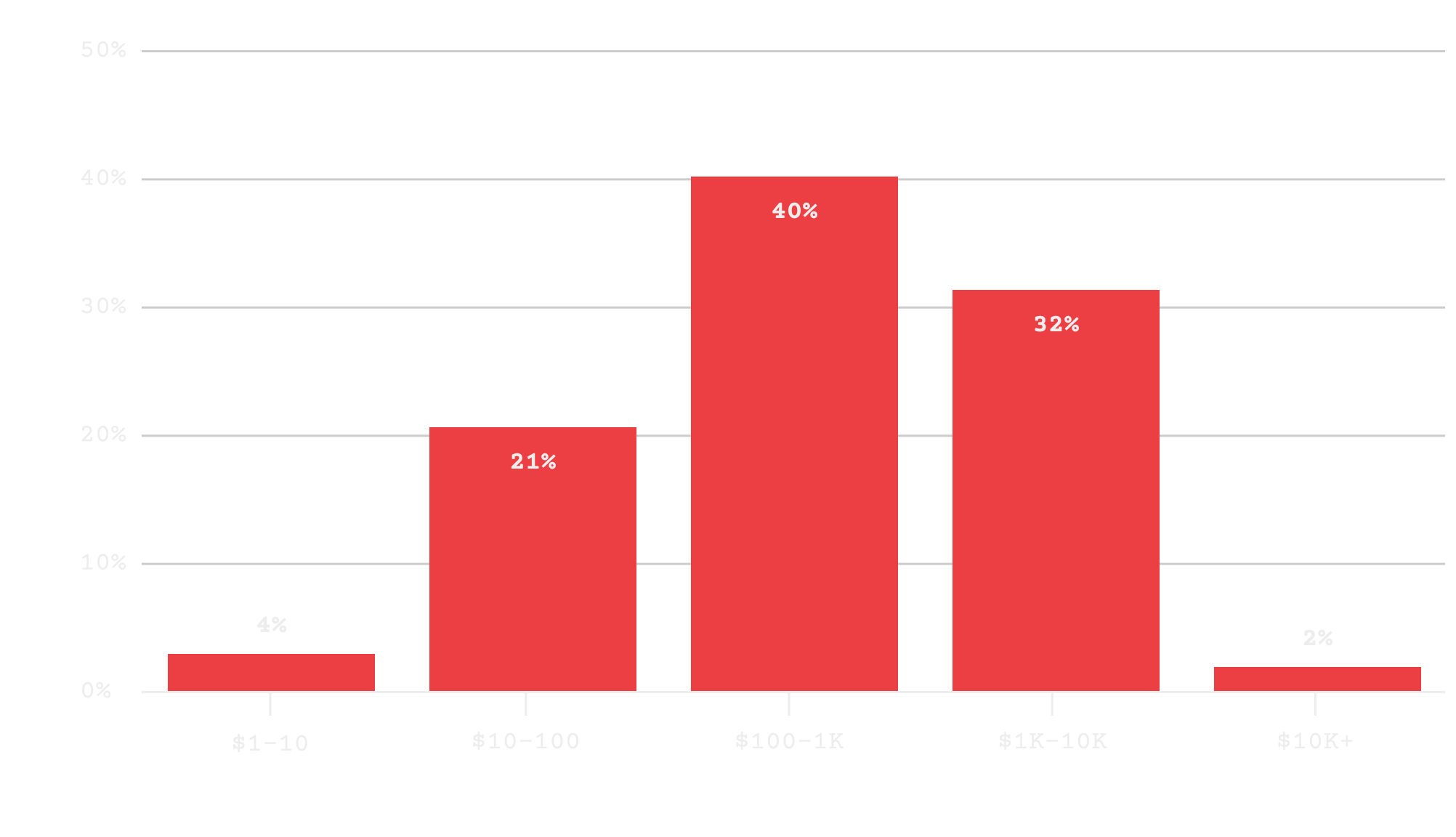
Which best describes the pricing plan for your lowest-cost pricing tier on a monthly basis?
The $10–$100 range overwhelmingly dominates as the most common entry-level price point. With a meaningful share starting above $100, this suggests many SaaS companies are intentionally anchoring on accessible pricing while leaving room to expand customers up the pricing ladder over time.

Which best describes the pricing plan for your highest-cost pricing tier on a monthly basis?
While most companies start with relatively affordable entry pricing, the top end of pricing tells a different story. A majority offer plans at $100+ per month, with nearly a third extending into the $1,000–$10,000 range, highlighting how common it is for SaaS businesses to support meaningful expansion revenue at the high end.
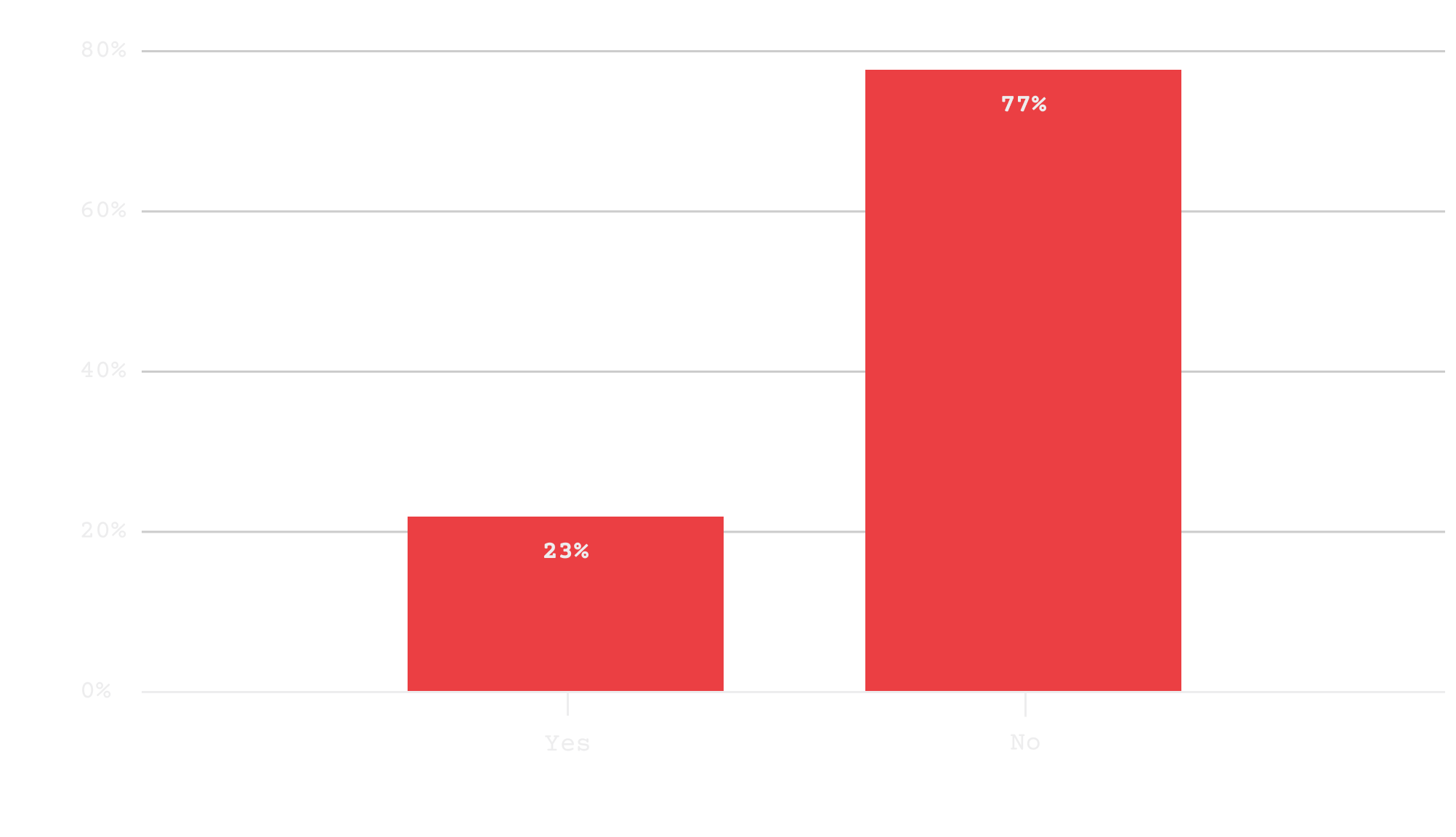
Do you offer a free trial for your product?
Free trials are clearly the norm, with more than three-quarters of respondents offering one. This reinforces how important “try before you buy” has become in SaaS, especially as competition increases and buyers expect hands-on product experience before committing.